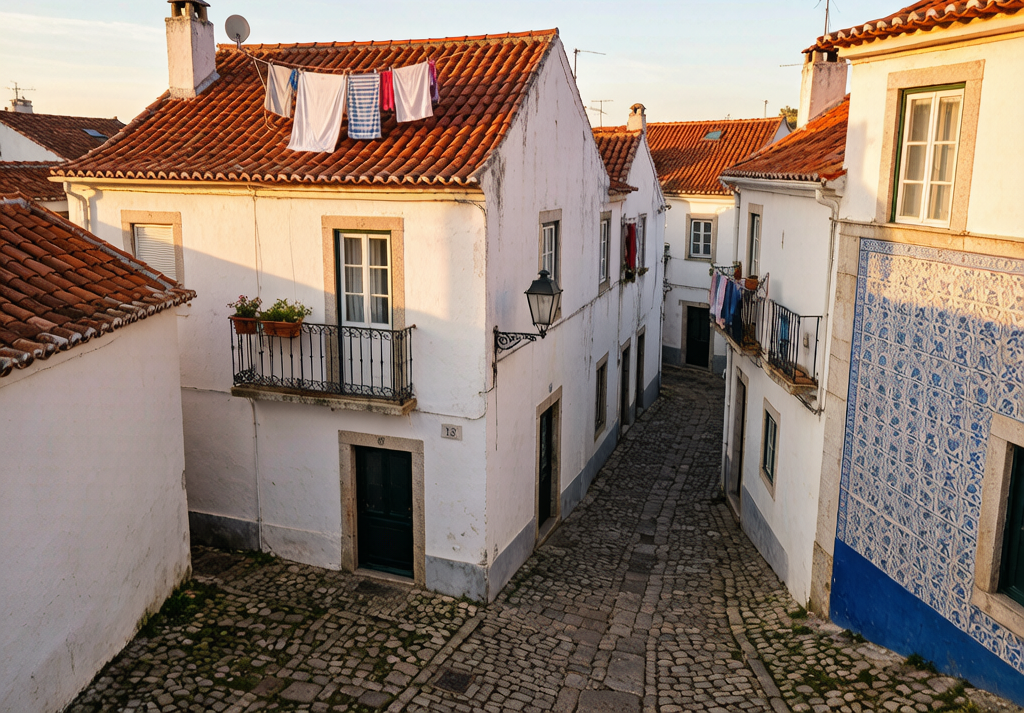
We’ve visited more than forty cities, and the ones we remember best aren’t the ones we saw from a tour bus or the back of a taxi. They’re the ones we walked until our feet ached. Walking travel has become our default, not because we’re disciplined, but because it’s the only way we’ve found to actually feel a place instead of just photographing it.
You See the City Between the Sights
The famous stuff — the cathedral, the bridge, the market — is connected by streets that never make it into guidebooks. Those streets are where the city actually lives. A laundromat with a handwritten sign. A grandmother selling mangoes from a folding table. A dog sleeping in a doorway that every local steps around without breaking stride.
When you walk, you get the in-between. When you ride, you only get the endpoints. We once spent a whole afternoon walking from a museum back to our apartment in Lisbon and saw more of the real city in those ninety minutes than we had in three days of scheduled sightseeing.
We don’t plan these walks, which is the point. We just pick a direction and let the streets pull us. Getting mildly lost is part of it, though we’ll admit it works better in cities where the grid is forgiving.
The other thing walking gives you is scale. A map flattens a city, but walking tells you how it actually fits together — how one neighborhood hands off to the next, where the wealthy streets end and the ordinary ones begin, which hill is worth the climb. That sense of geography lodges in your body and stays there. Years later we can still feel the shape of a city we walked through once, even if we’ve forgotten the names of half its streets.
Walking Finds What You Didn’t Know to Look For
Every “best restaurant” list in the world points you to the same ten places. But the best meal we had in Mexico City wasn’t on any list. It was a tiny taco stand two blocks from where we were staying, which we only noticed because we walked past it six times and kept seeing the same locals lined up at the counter.
That’s the quiet advantage of walking travel: it lets the city make recommendations to you. A restaurant with a line of office workers at 1 p.m. A shop selling something you’ve never seen before. A park you’d never find on a map because it’s too small to matter to a search algorithm.
You can’t optimize your way into these discoveries. You just have to be there, on foot, paying attention, with enough time to stop.
It’s the Only Free Thing That Improves Everything
We keep a rough count on our phone, and on a good travel day we’ll walk ten or eleven kilometers without really trying. It costs nothing. There’s no ticket, no surge pricing, no waiting for a bus that may or may not come. And at the end of the day, we’re tired in the good way — the kind of tired that makes dinner taste better and sleep come easily.
Walking also fixes the two things that travel usually makes worse: our mood and our back. Sitting in transit all day leaves us stiff and dull. Walking leaves us calm and awake. We sleep better in new places when we’ve actually used our body during the day.
The honest caveat: walking everywhere does eat time, and in a truly sprawling city it’s not always practical. Some places are genuinely built for cars, and pretending otherwise is a good way to exhaust yourself and hate the trip. But most old cities are smaller than they look on a map. The distance you think is “too far” is usually about forty minutes on foot.
We also carry less now, which helps. A small bag with water, a hat, and good shoes beats a heavy daypack every time. Nothing kills a walk faster than sore feet and a strap digging into your shoulder. Travel light, and ten kilometers stops feeling like a decision and starts feeling like the default.
You Remember More
There’s research about how movement helps memory, but we don’t need it. We know from experience that the cities we walked are the ones we can still navigate in our head years later. We can picture the corner where we turned left in Kyoto, the smell of the bakery in Porto, the exact shade of blue on a door in Chefchaouen.
The cities we taxied through are a blur. We remember the monuments and nothing else. The difference is the walking itself — moving through a place slowly, at the pace our body was built for, is what turns a city from a postcard into a memory.
If you only do one thing differently on your next trip, make it this: skip the taxi for any distance under five kilometers and walk it instead. You’ll see less on a checklist and more of everything that matters.