# A Beginner’s Guide to Car Camping Gear That Actually Lasts
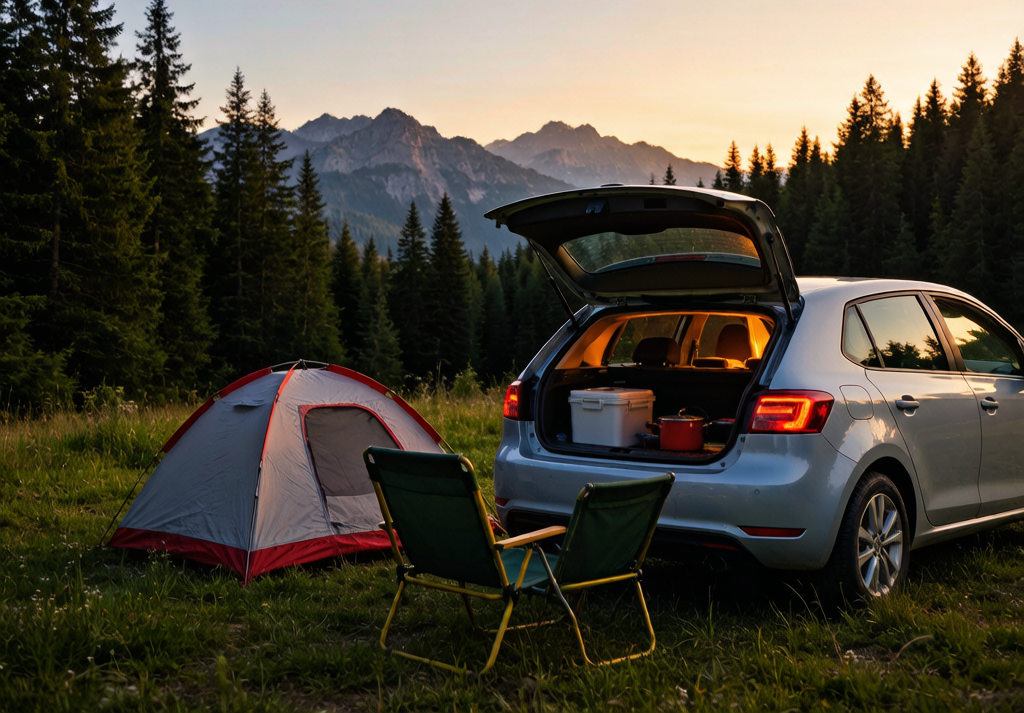
Our first car camping trip was a disaster in the best way. We threw an old comforter, a cooler full of ice that melted by noon, and a $20 camp chair from a gas station into the back of our hatchback and drove three hours to a state park. We slept badly, froze at 4 a.m., and woke up covered in condensation. We also had the best weekend we’d had in months, and we’ve been car camping ever since.
What we’ve learned in the years since is that you don’t need much car camping gear to start, but the things you do buy should last. The cheap stuff fails in exactly the ways that ruin a trip — a chair that collapses, a cooler that won’t hold ice, a sleeping pad that deflates at 2 a.m. Here’s what we’d tell a beginner, based on the gear that has actually survived in our trunk for years.
The sleep setup is where you spend real money
If you only buy three things well, make it these: a sleeping pad, a sleeping bag or quilt, and a way to stay dry. Everything else is negotiable. Sleep is the difference between loving car camping and never going again.
Start with a good sleeping pad. A foam pad from a reputable brand runs about $40 and will last a decade. An inflatable pad is more comfortable but costs more and can fail. We still use the foam pad we bought five years ago, and we’ve watched two inflatable pads develop leaks in that time. For a beginner, foam is the honest answer.
For a sleeping bag, buy for the coldest temperature you’ll actually camp in, not the coldest you can imagine. We camp mostly in spring and fall in the southern US, so a 30-degree bag covers us fine. If you run cold, go warmer. And if you’re car camping rather than backpacking, you can cheat with a regular blanket and pillow from home — there’s no weight penalty, which is the whole joy of sleeping next to your car.
The kitchen: keep it boring and indestructible
You don’t need a fancy camp kitchen. We’ve cooked hundreds of meals on a $35 two-burner propane stove that lives in a plastic bin in our trunk. It’s not glamorous and it works every time.
The gear that matters: a two-burner stove, a decent cooler, one cast iron skillet, one pot, a spatula, a cutting board, and a small tub for washing dishes. The cast iron skillet is the single best purchase we’ve made — it works on any stove or fire, it’s nearly impossible to ruin, and it makes better food than any ultralight camp pan.
On coolers: a basic rotomolded cooler is expensive but keeps ice for four or five days, which is the difference between cooking real food and eating gas station snacks. If you’re only going out for a night or two, a cheap cooler with block ice is fine. Buy the good one when you start going for longer stretches.
Shelter, chairs, and the small stuff
Car camping shelter is simpler than people think. A basic dome tent works fine, but honestly, sleeping in the car itself — especially an SUV or minivan with the seats folded down — is warmer, drier, and faster to set up. Half the trips we take now, we don’t even pitch a tent. We use a cheap screen canopy or just a tarp and poles for shade and rain cover at the site.
For chairs, spend a little more once. We’ve broken three gas-station chairs in two years. A $50 chair from a real outdoor brand has lasted four years and counting. Same logic for a headlamp — buy one decent one instead of a three-pack of junk.
The small stuff that earns its place: a first-aid kit, a headlamp, a multi-tool, a folding table, and a 5-gallon water jug. That last one is the thing beginners always forget, and it solves more problems than any piece of gear we own.
What we’d tell a beginner
Don’t buy everything at once. Our honest advice is to start with the sleep setup and a stove, borrow or rent anything else, and add gear only after a trip shows you a real gap. We’ve watched too many people drop $800 on gear for a hobby they did twice.
One thing we wish someone had told us early: organize your trunk before you leave. Car camping gear multiplies fast, and there’s a special misery in digging through a jumbled hatchback at 11 p.m. looking for your headlamp. We keep everything in three labeled plastic bins — kitchen, sleep, and camp setup — so we can find anything in the dark without a flashlight. That $30 worth of bins has done more for our trips than any piece of gear we’ve ever bought.
Most of our favorite car camping gear is cheap, boring, and years old. The cast iron skillet, the foam pad, the $50 chair, the plastic bin that holds it all. None of it is exciting to buy, and all of it still works. That’s the whole point of gear that lasts.