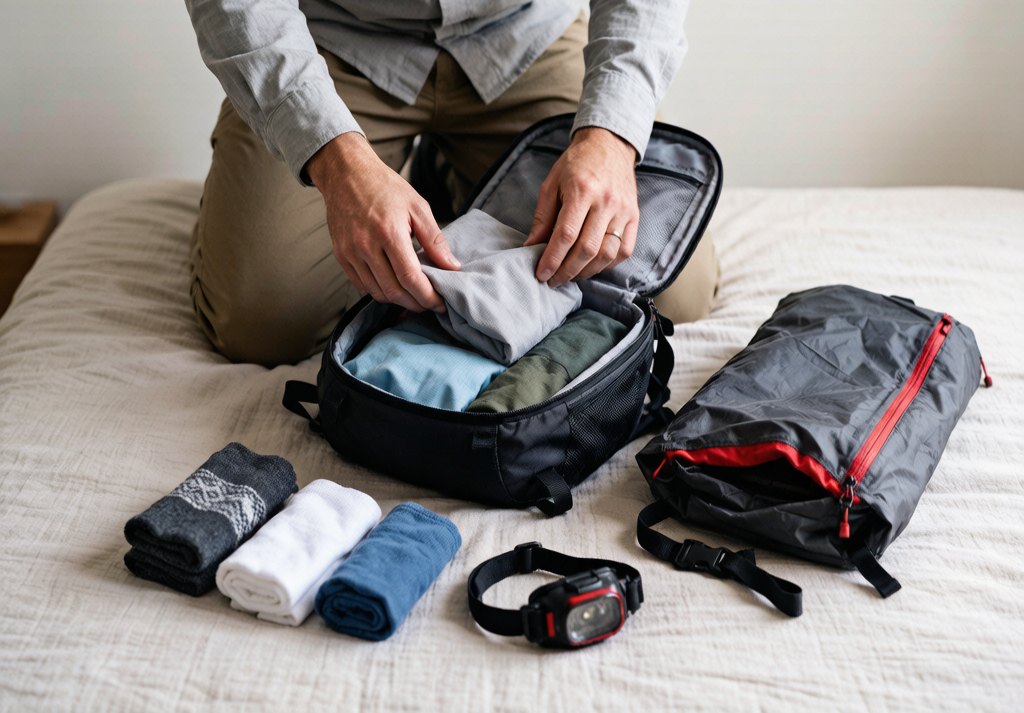
There’s a version of lightweight camping that looks like a shopping list: titanium this, ultralight that, a thousand dollars of gear that weighs less than your winter coat. We know, because we almost bought into it. Our first few trips, we assumed going light meant going broke.
Then we actually looked at what we were carrying and realized most of our weight wasn’t gear. It was decisions we hadn’t made. Cutting that weight cost us nothing. If you want to camp lighter without opening your wallet, here’s what worked for us.
Weigh Everything First, Because Guessing Lies
Before you buy a single thing, weigh what you have. We did this on a kitchen scale one evening and it was humbling. We thought our pack was maybe fourteen kilos. It was nineteen. The difference between what we imagined and what we carried was five kilos of stuff we would have sworn we needed.
We made a list of every item with its weight in grams. It took an hour and it changed everything, because lightweight camping starts with knowing the number, not with a lighter tent. Most people — us included — carry three or four kilos of things they never touch. You can’t remove what you don’t know is there.
The Biggest Cuts Are Free
The single heaviest thing in most packs isn’t the tent or the sleeping bag. It’s the “just in case” pile. Mine included a second pair of shoes, a camp chair, a book we’d already read, a full first-aid kit for a war zone, and enough spare clothes for a week when we were going out for two nights.
We cut all of it. Two nights means one change of clothes, not five. We left the camp chair and sat on our sleeping pad or a log. We took half the first-aid kit and our phone instead of a paperback. Just those cuts dropped our pack by over four kilos, and we didn’t spend a cent.
There’s a rule we now use before every trip: if we didn’t use it last time, it stays home. That one rule has cut more weight than any purchase ever will. Lightweight camping is mostly the discipline of leaving things behind.
Repurpose What You Already Own
Once the obvious stuff was gone, we started looking at each item and asking if something we owned could do two jobs.
Our daily water bottle replaced the fancy hydration bladder. A cheap fleece blanket we’ve had for years worked as a summer sleeping bag on warm nights — not glamorous, but warm enough when the low was fifteen degrees. A rain jacket we already wore to work became our camp shell. Our phone, which we were bringing anyway, replaced the camera, the map, the flashlight, and the notebook. That’s four items eliminated without losing a single function.
The best swap was food. We stopped buying expensive dehydrated camping meals and packed oats, dried fruit, nuts, and instant noodles from the supermarket. Lighter, cheaper, and we could actually pronounce the ingredients.
The Honest Limits of Doing It on the Cheap
We need to be straight with you: there’s a floor to this. Your big three — tent, sleeping bag, sleeping pad — set a hard minimum on your weight, and if yours are old and heavy, no amount of leaving things behind gets you to true ultralight. Our old tent weighs 2.4 kilos and we still carry it. We’d love a lighter one, but we haven’t bought it because we don’t camp enough in bad weather to justify it.
So this approach won’t turn you into a gram-counting purist. What it will do is get you from nineteen kilos down to around eleven or twelve, which is enough to make the hike in feel easy and the night out feel fun. And it’ll teach you something that no gear purchase ever will: that you were always carrying more than you needed, and most of it was never helping you.
Start with the scale, then the “just in case” pile, then the double-duty swaps. Lightweight camping, it turns out, is less about what you buy and more about what you finally decide you can live without.