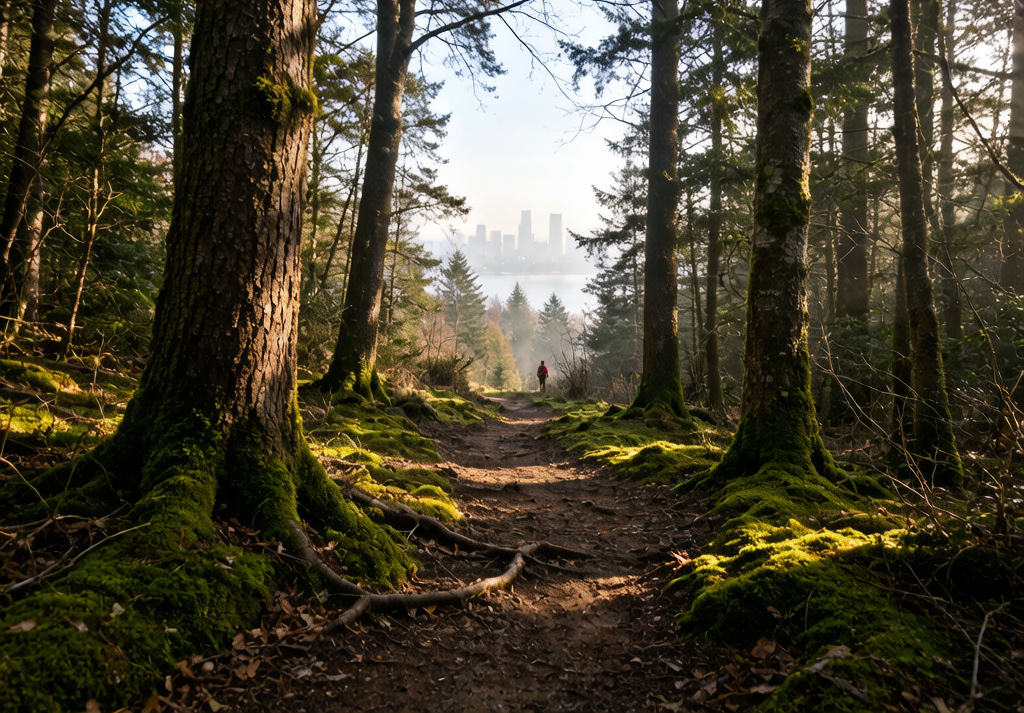
We grew up thinking hiking meant loading the car, driving two hours, and spending the whole day out. It’s why we barely hiked. Then we moved to a city and discovered, almost by accident, that there were four trailheads within a thirty-minute bus ride of our front door. We’d lived there for a year and never known.
That discovery changed how we spend our weekends. If you think hiking near your city isn’t a thing — or that it requires gear, a car, or a full day — this is for you.
Start by Finding the Trails You Already Have
Most people are surrounded by more trail than they realize. The trick is knowing where to look, and it’s rarely the search results for “best hikes near us.”
We use three methods. First, a simple map app with the terrain layer turned on — green patches, rivers, and hills that you’ve driven past for years are often laced with trails. Second, we ask local runners and dog walkers, because they cover ground daily and know the quiet paths no one posts about. Third, we check the website of our city’s parks department. Almost every city maintains a list of trails with distances and difficulty, and nobody reads it.
The first hike we ever did near home was a four-kilometer loop around a reservoir we’d driven past maybe a hundred times. It took ninety minutes and we saw a heron and exactly two other people. We felt like we’d found a secret room in a house we’d been living in all along.
What a Beginner Actually Needs
Almost nothing. That’s the part the outdoor industry doesn’t want you to hear.
For hiking near your city — not a multi-day mountain traverse, just a few hours on a local trail — you need three things: shoes with grip, water, and a charged phone. That’s it. The expensive stuff can wait.
We did our first year of hiking in ordinary running shoes. They were fine on dirt and gravel and only slippery once, on wet rock, which taught us to slow down. You don’t need a $200 pair of boots to walk a four-kilometer loop. When we eventually bought trail shoes, it was after we’d already hiked thirty times and knew we’d keep going.
One thing we do recommend: download the map of the area before you go, because coverage drops exactly where you need it. And tell someone where you’re headed. It feels silly the first few times, then it just feels like buckling a seatbelt.
Building the Habit Without Making It a Chore
The reason most people give up on hiking isn’t the hiking. It’s the friction of getting out the door. So we removed it.
We keep a small daypack by the door with a water bottle, a rain shell, and a granola bar inside. When the urge hits — or when the forecast shows a clear Saturday morning — we grab it and go. No packing, no decision-making, no “we’ll get ready in a minute” that stretches into an hour.
We also stopped treating hiking as an all-day production. Our sweet spot is sixty to ninety minutes, twice a week. Short enough that it fits before breakfast or after work, long enough to actually reset our head. A two-hour hike once a month is a special occasion. A ninety-minute loop twice a week is a life.
The Honest Part About Hiking Near a City
It’s not the wilderness, and it won’t always be pretty. Some trails near cities follow power lines or skirt the back of an industrial estate before they hit the trees. You’ll hear traffic on the first kilometer sometimes. You’ll share the path with mountain bikers, families, and the occasional guy doing a work call on speaker.
If you want total solitude and epic views, you’ll eventually drive farther. That’s fine. But there’s a specific, underrated joy in knowing you can leave your apartment at 7 a.m. and be standing under trees by 7:40, watching the city wake up from above.
Start small, start close, and start this weekend. The best hiking near your city isn’t the one in the guidebook. It’s the one you’ll actually walk to, again and again, until it feels like yours.