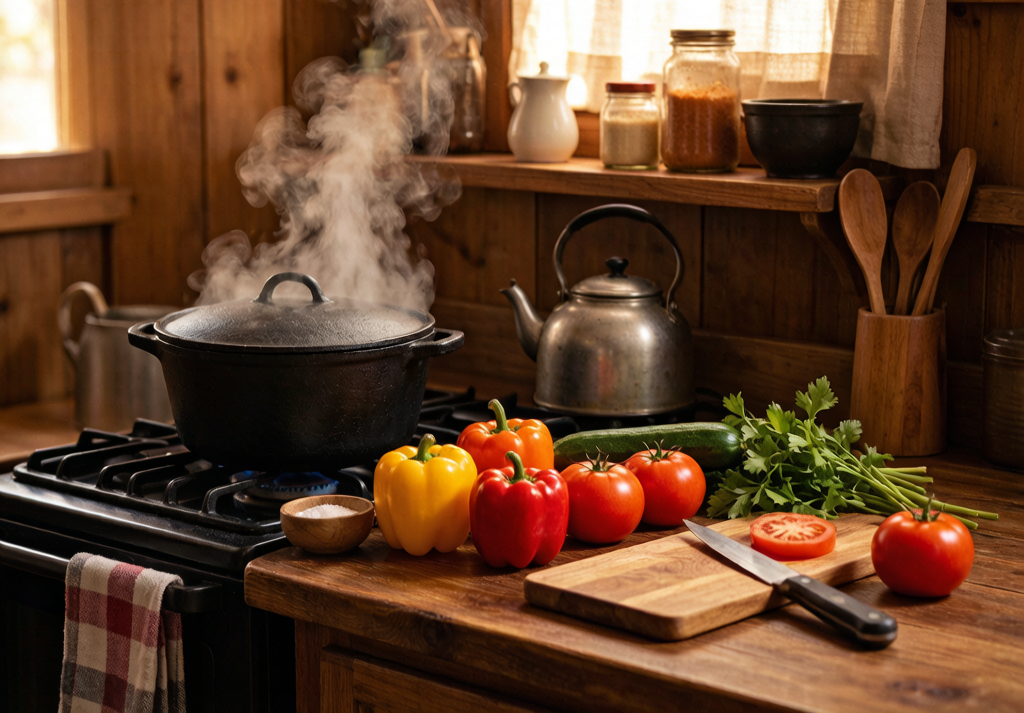
We work from a laptop and we still don’t have time to cook the way food magazines suggest. Nobody does. The people who tell you to “set aside an afternoon” to braise something for dinner are either retired or lying. We wanted slow food—real meals that taste like they took hours—without actually giving up our evenings. It took us a while to realize the two things aren’t in conflict.
Slow cooking, the way we mean it, has almost nothing to do with spending more time in the kitchen. It has everything to do with when that time happens, and who’s paying attention during it.
The Time Is In The Waiting, Not The Doing
Most of what makes food taste “slow” is unattended time. A stew cooks for three hours, but you’re only actively working for maybe twenty minutes of that. The mistake we made for years was treating the three hours as something we had to schedule around. We’d think, “we don’t have three hours tonight,” and order takeout.
The fix was reframing it. We don’t need three free hours. We need twenty minutes in the morning or the evening before, and a pot that can be left alone.
On a Sunday we’ll spend twenty minutes chopping onions, browning a cheap cut of beef, and dumping in tomatoes and broth. Then we walk away. The stove does the work while we answer email or go for a run. Dinner takes twenty minutes of our actual day and tastes like we did something impressive.
The Tools That Actually Earn Their Space
We’re generally against single-purpose kitchen gadgets, which is why we only own two slow-cooking tools and they both pull double duty.
The first is a Dutch oven—the heavy enameled pot we mentioned owning in another post. It goes from stovetop to oven and back, and it’s the only pot we’ve found that genuinely improves with age. The second is a pressure cooker. We know that sounds like the opposite of slow cooking, but it’s not. A pressure cooker does in forty minutes what a braise does in three hours, and on a Tuesday night that’s the difference between eating a real meal and eating cereal standing over the sink.
The honest caveat: a pressure cooker is not the same as a low-and-slow braise. The texture is close but not identical. Collagen breaks down, but the flavor doesn’t deepen quite the same way. We use it on weeknights and save the Dutch oven for weekends when we can afford the three hours.
A Rotation Of Three Meals
The part nobody tells you about cooking slowly with a full schedule is that you need a rotation. We have three meals we can make on autopilot: a tomato and white bean stew, a chicken and rice dish, and a lentil soup with whatever vegetables are about to go soft. Three is enough variety that we don’t get bored, and few enough that we never have to think about what to cook.
Each one follows the same shape. Twenty minutes of active work, then a long quiet stretch where the food takes care of itself, then we eat and pack the rest for lunch. Leftovers are the real slow-cooking secret. Cooking once and eating three times is how people with jobs have always fed themselves.
We still get it wrong. Some weeks we don’t cook at all and we eat toast for three dinners in a row, and we’ve made peace with that too. Slow living isn’t about never being tired.
It’s A Posture, Not A Technique
Here’s what we actually believe now: cooking slowly is less about the technique and more about the decision to feed yourself like it matters. It’s the difference between eating in front of a screen and eating at a table with a plate and a minute of quiet.
You don’t need a free afternoon. You need twenty minutes, a pot, and the willingness to let something finish on its own while you go do your life. That’s the whole trick.