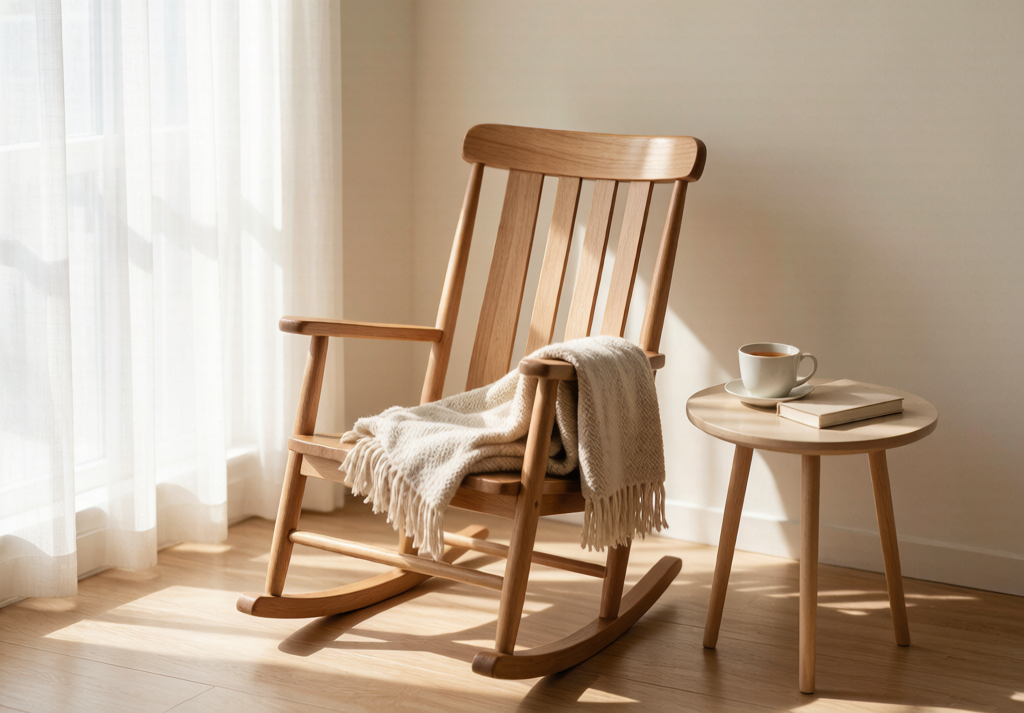
We’ve tried a lot of slow living habits. Morning pages. Digital sunsets. Meditating before coffee. Most of them lasted two weeks and then quietly died, because most of them ask you to add something to an already full day. The habit that actually stuck—the one we wish we’d started a decade sooner—asks the opposite. It asks us to subtract.
The habit is simple enough to sound silly: we stopped carrying our phone into the kitchen in the morning. That’s the whole thing. Two minutes, no app, no journal, no forty-dollar candle. And it quietly rearranged how the first hour of our day feels.
The Habit Itself
Here’s the concrete version, because “be more present” is not a habit. When we wake up, we leave our phone on the nightstand, plugged in. We walk to the kitchen, put the kettle on, and make coffee or tea without a screen in reach. We don’t check messages, we don’t read the news, we don’t queue a podcast. We stand at the counter and wait for the water to boil.
That waiting is the habit. It used to feel like dead time, so we’d fill it by scrolling. Now it’s the only part of our day where nothing is asking for our attention, and it took us an embarrassingly long time to notice that we were the one ruining it.
The first week was uncomfortable. We reached for our phone out of reflex six or seven times before we’d finished pouring the water. We didn’t realize how automatic it had become—hand to pocket, thumb already scrolling, before we’d made any conscious decision at all.
Why It Worked When Nothing Else Did
Every other slow living habit we tried added a task. Do this, write that, sit for twenty minutes, light a candle, set an intention. Those are fine if your life has slack in it, but ours didn’t, and adding a chore in the name of slowing down is a strange contradiction.
This one removed a thing instead. We didn’t need to find time to meditate. We just stopped handing the first ten minutes of our day to an algorithm that’s engineered to keep us looking. The quiet was already there, underneath the phone. We’d been covering it up.
The honest note: this habit didn’t fix our whole life. We still check our phone too much after 9 a.m., and some mornings we break the rule entirely because we’re traveling or because we stayed up too late and need the screen to wake us up. The habit is a railing, not a cage.
The Second-Order Effects
The surprising part is what leaked into the rest of the day. We started noticing other gaps we’d been filling with our phone: the ninety seconds waiting for the elevator, the line at the grocery store, the moment after we sit down at our desk. We didn’t have the discipline to “be present” in all of them, but we had the awareness to catch ourselves sometimes, and sometimes is enough.
We also started eating breakfast sitting down. We don’t know why that followed, but it did. Once the first hour of the day stopped feeling like triage, we stopped treating every other meal like refueling. Small changes really do stack, as long as the first one is small enough to actually survive.
Start Smaller Than You Think
If you want to try something like this, start smaller than we did. Don’t declare a whole morning routine. Don’t buy anything. Just pick one two-minute pocket—waiting for coffee, walking to the bus, standing in the shower—and decide that your phone isn’t invited.
That’s it. The slow living habit that changed our days the most wasn’t a ritual we added. It was a two-minute stretch of nothing, and the only hard part was learning to leave it alone.