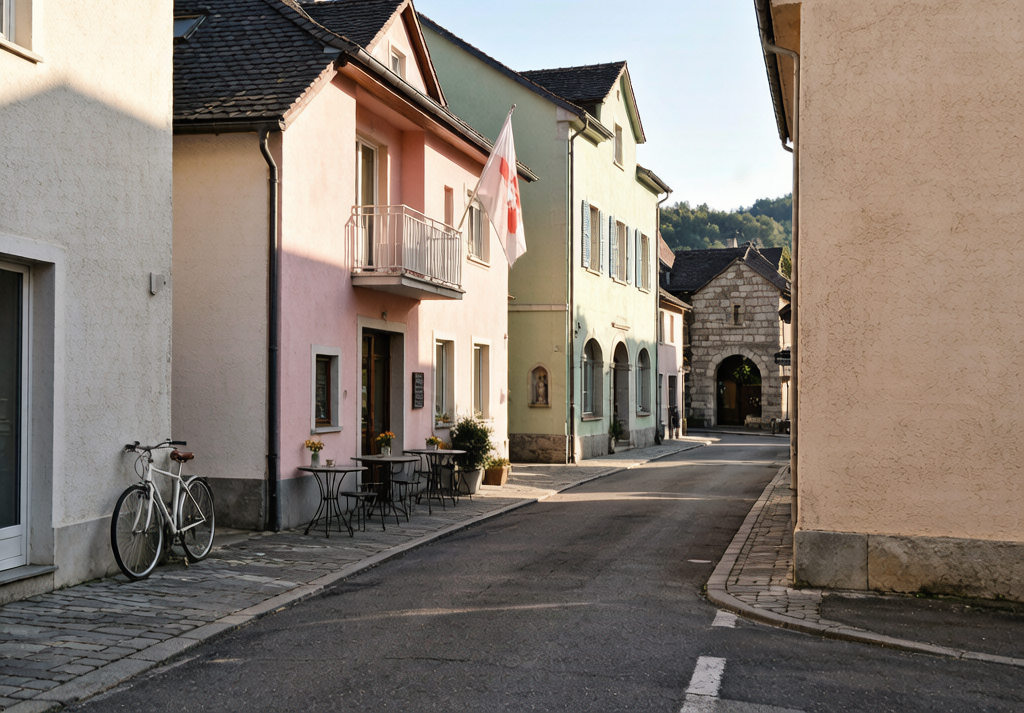
Last spring we rented a one-bedroom in a town of about four thousand people, forty minutes inland from the coast in central Portugal. The plan was two weeks. We stayed a month, and by the end we’d rewritten most of what we thought we knew about how to travel. This wasn’t our first slow travel experience, but it was the one that changed us.
The town has one main square, a bakery, a small market on Saturdays, and a café where the same five old men sit at the same table every afternoon. There is nothing to do there. That turned out to be the point.
The First Week Felt Like a Mistake
We arrived on a Sunday and everything was closed. The apartment was cold at night and the WiFi cut out whenever it rained. Our first instinct, the old instinct, was to fix it by leaving. Book a bus somewhere busier, find a city with energy and options and people speaking English. We had to sit with that impulse for three days before it faded.
By Thursday we’d learned the rhythm: bakery opens at seven, the bread sells out by nine, the market is Saturday morning, nothing moves between one and four in the afternoon. The town wasn’t empty. It was timed differently. Once we stopped fighting the schedule, we slipped into it like a current.
That first week taught us something we couldn’t have learned in a city. When a place has no entertainment, you stop expecting to be entertained. You start noticing things instead.
The Slow Travel Experience Nobody Photographs
Our days looked like this. Wake up, coffee on the balcony, write for three hours. Walk to the bakery. Work a little more. Eat lunch at home. Then a long walk in the afternoon — down the hill past the olive groves, or along the old road out of town where the dogs bark but never leave their gates. Cook dinner. Read. Sleep.
That’s it. There is no photo of that. Nobody posts a reel of sitting on a bench watching a man unload oranges from a truck for twenty minutes. But those twenty minutes were some of the richest we’ve had in years. We noticed the man had a limp and that the oranges were imperfect, the way fruit looks when it isn’t grown for export. We bought a kilo of them for a euro and they were the best oranges we’ve ever eaten.
A slow travel experience isn’t a checklist. It’s the accumulation of small, unremarkable moments that add up to a feeling you can’t name until you leave.
What a Month Gives You That a Week Never Can
We’ve done the fast version of Portugal — four cities in ten days, and we remember almost none of it. A month in one town gave us something different: repetition, which is how places become real.
We ate at the same café enough times that the owner stopped handing us a menu and just brought the grilled sardines we always ordered. We learned the name of the man who runs the market’s fish stall, and the name of his son, and that the son wants to move to Lisbon. We got invited to a birthday dinner in someone’s home, and we sat at a table with eight strangers who treated us like a neighbor. You don’t get that in a week. You don’t get that in three weeks. You get it because the hundredth time you wave at someone across the square, they wave back and mean it.
The honest part: we got lonely. There were evenings, maybe four or five of them, where the silence felt less peaceful and more like a wall. We don’t want to sell you a version of this where slow travel is nothing but golden-hour contentment. Some nights we missed our friends so much we almost booked a flight. We didn’t, and we’re glad. But the loneliness was real and we think it’s dishonest to leave it out.
What we Took Home
We left with one small bag more than we arrived with, mostly books and a ceramic bowl the market lady insisted we take. But we left carrying something heavier: the knowledge that we don’t need a destination to be happy, and we don’t need entertainment to be engaged.
The town taught us that the thing we were running from — boredom, slowness, the absence of stimulation — was the thing we actually needed. Since then, we plan our travel differently. We don’t look for what a place has to offer. We look for whether it has a bakery, a market, and somewhere we can walk for an hour without crossing a road. The rest, it turns out, takes care of itself.